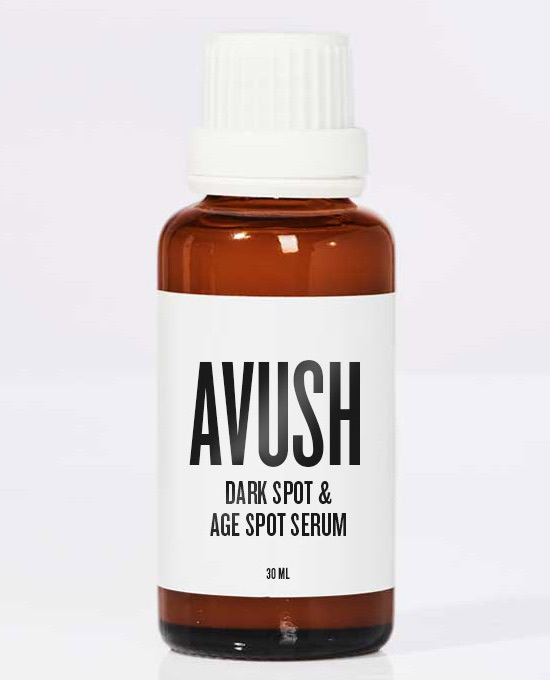
With pigment spots, the promises are big and patience runs short. Our team has used Avush in the salon – here’s our honest take on what its actives can do, what’s proven and what you can realistically expect.
ARBUTI Hair Salon · Updated October 2026
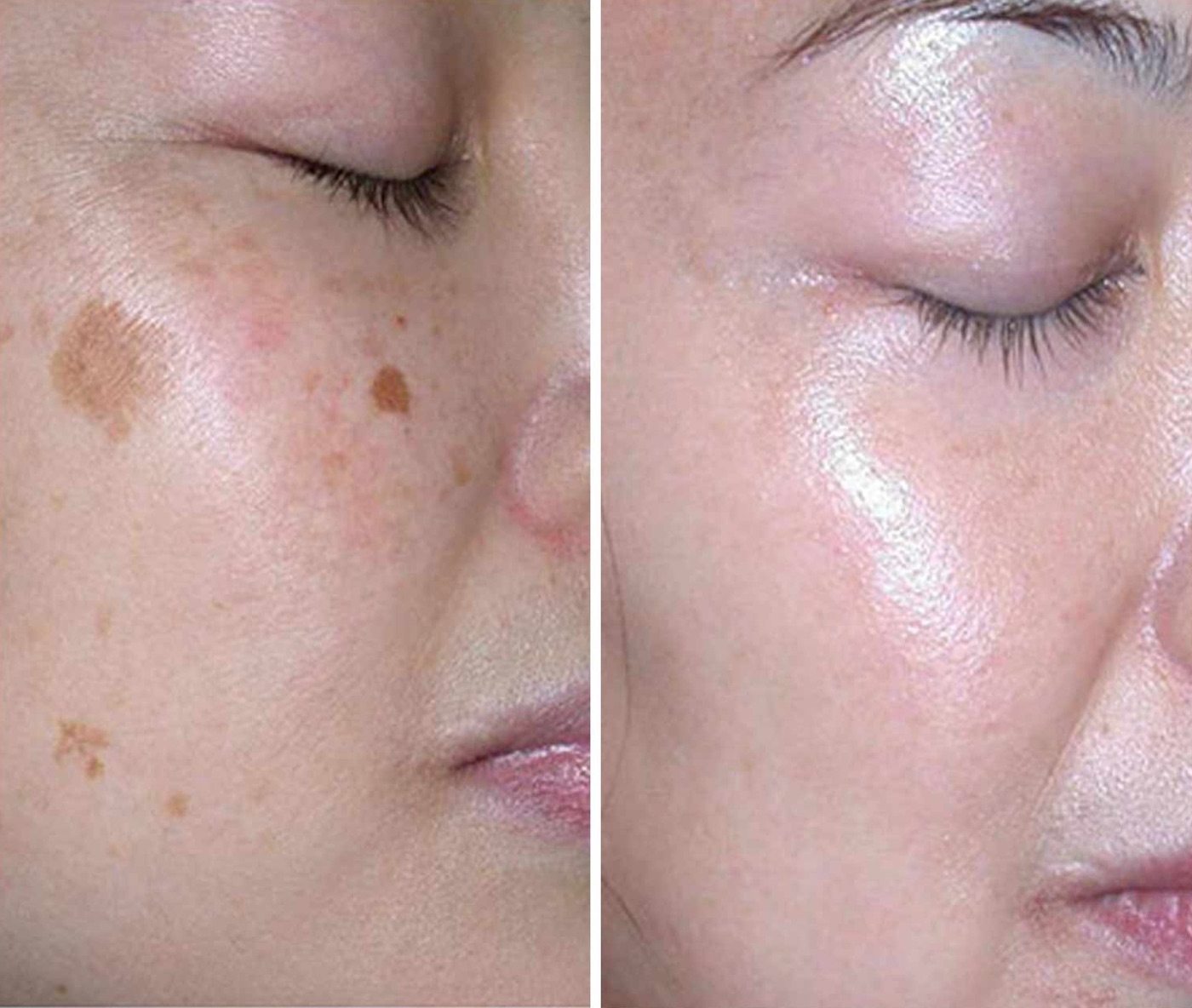
Original photo from Avush · before on the left, after on the right. The brand gives neither age nor usage period; results vary from person to person.
What Avush promises – and what’s behind it
We looked at every claim and sorted it by how well it’s backed up. The result is typical of cosmetics: the actives are known and studied – the finished product itself isn’t.
Information from Avush, the ingredient manufacturers and Dermatest®, as of October 2026.
Claim
What’s behind it
Alpha-arbutin, 1% according to Avush
Slows tyrosinase, the enzyme the skin uses to make melanin. Well described in lab studies; the concentration is a manufacturer figure.
Skin Moon™
According to ingredient maker Bionap, the plant complex inhibited tyrosinase in the lab more strongly than kojic acid and hydroquinone (60.2% vs 43.7% and 30.2%). A lab value, not a result in people using Avush.
Niacinamide
In studies, reduces the transfer of pigment to skin cells. In Avush it sits far down the ingredient list – the amount is fairly small.
Liquorice and sea daffodil
Well-known brightening extracts. For sea daffodil there is data from the ingredient maker whose study design hasn’t been published – so we don’t quote any figures.
Dermatest® “very good”
Rates skin tolerance (10/2023), not effectiveness.
Study with the Avush set
Not published.
Why we still recommend Avush: because the combination makes sense. Several actives working at different points of pigment formation, a tonic as the first step, no hydroquinone, no kojic acid – and a routine you can actually keep up morning and night. With pigment spots, sticking with it is exactly what decides the result.
Our experience in the salon
In the salon, we often notice pigment spots before our clients do – at the temple while colouring, on the forehead during a blow-dry, on the hands while styling. Our team has used and tested Avush in the salon. We recommend it because it’s a gentle, easy-to-explain routine that women and men can follow equally well.
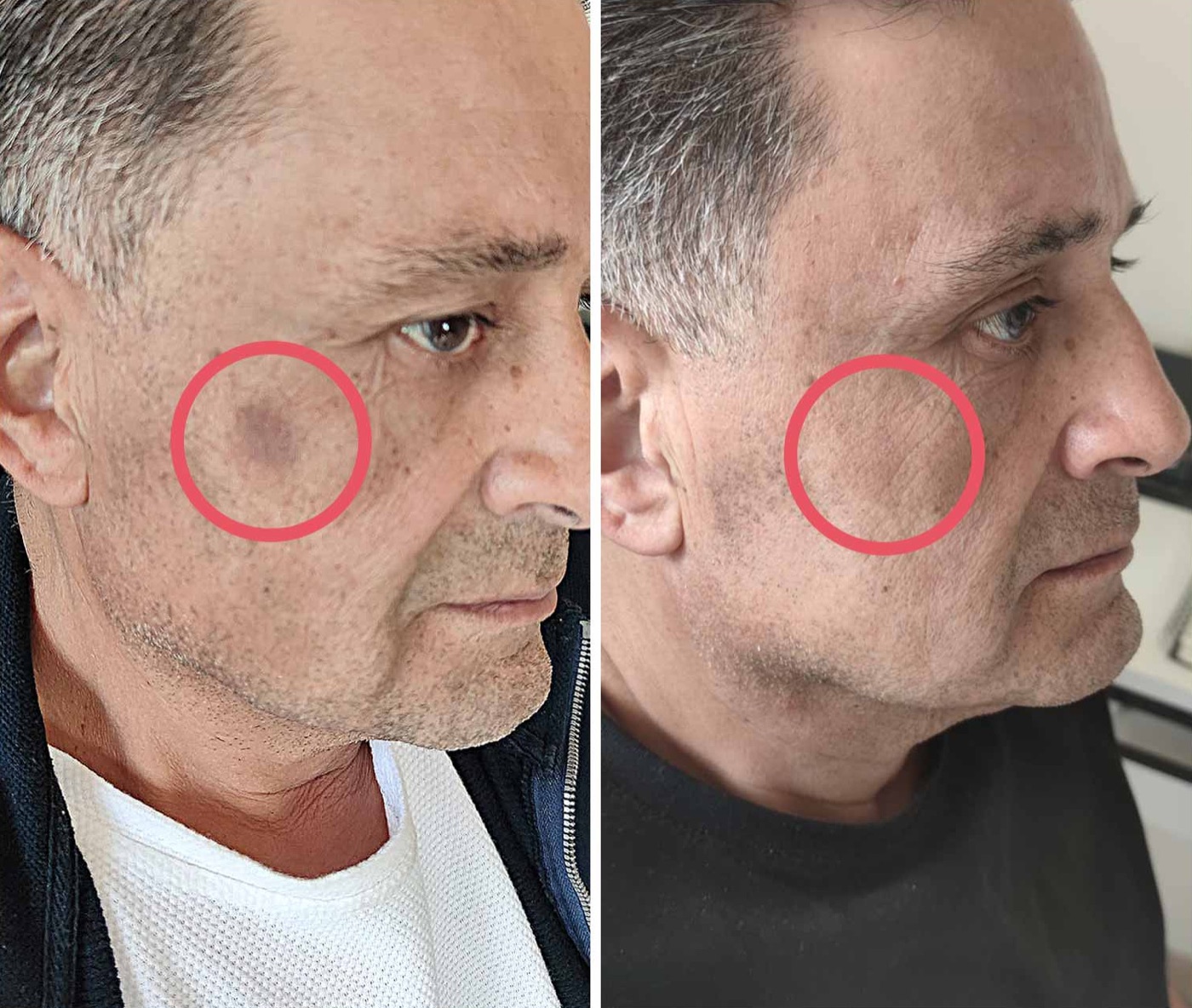
Original photo from Avush · before on the left, after on the right; the circle was added by the brand. No details on age or duration; results vary from person to person.
Avush or Thiamidol?
To be fair: the most thoroughly studied active for pigment spots today is Thiamidol. Eucerin had its routine of serum, day cream and night cream assessed by dermatologists in 457 participants over twelve weeks. Avush, on the other hand, pairs several well-known brighteners with a tonic in a simple routine for face and body. That’s why Avush comes first for us – and Thiamidol is, in our view, the strongest alternative.
Manufacturer information, as of October 2026. All ten products compared: /en/pigment-spot-test/
Product
Active
What you should know
Avush Serum + Tonic
Alpha-arbutin and other brighteners
Two steps, face and body; no product study published
Eucerin Anti-Pigment Dual Serum
Thiamidol
Manufacturer study with 457 participants – for the full routine
La Roche-Posay Mela B3 Serum
Niacinamide, Melasyl™
Pharmacy brand; manufacturer data from a study with 41 women
Lighter, not invisible: skincare can fade spots and even out skin tone. Removing them completely is only possible at a dermatologist’s, for example with laser.
Weeks, not days: Avush says most people see a visible improvement after around two to three months. Older, darker spots often take longer.
Sunscreen is part of the treatment: at least SPF 50 during the day, and in summer the serum at night only.
Melasma often comes back. Skincare and sunscreen can soften it; more severe cases belong with a dermatologist.
Moles and spots that change should never be self-treated.
Several brighteners, two simple steps, no hydroquinone, no kojic acid – for face and body. Avush is the winner of our comparison for pigmentation and age spots. Stick with it for two to three months and wear sunscreen every day, and you’ll get the most out of it. Prices and delivery on avush.com.
What we like
Several brighteners instead of just one
Tonic and serum designed to work together
No hydroquinone, kojic acid or hormones
Skin tolerance “very good” according to Dermatest®
The actives in the Avush serum – above all alpha-arbutin – target pigment production; lab studies on the individual substances show this. There’s no study with the finished set. Our team has used Avush in the salon, and we recommend it. How much spots fade varies from person to person.
How much alpha-arbutin does Avush contain?
According to Avush, 1%, consistently across all of the brand’s language versions. Earlier figures of 5%, which also appeared on this page, were wrong – we’ve corrected them.
Does Avush have side effects?
Avush contains no hydroquinone, kojic acid or hormones; Dermatest® rates its skin tolerance as “very good”. The formula contains fragrance, including linalool – if your skin is very sensitive, patch-test it first. If you’re pregnant or breastfeeding, check with your doctor first.
Does Avush help with melasma?
Melasma is partly hormonal and often comes back. Brightening skincare and consistent sun protection can soften it; more severe melasma should be treated by a dermatologist.
Avush or The Ordinary Alpha Arbutin – which is better?
The Ordinary states 2% alpha-arbutin and is a simple serum with one main active. Avush combines alpha-arbutin with liquorice, sea daffodil, Skin Moon™, niacinamide and vitamin C, and adds a tonic. Want to try a single active? The Ordinary. Looking for a complete, well-matched routine? Avush.
We’re beauty and hair professionals, not dermatologists. Information from Avush, the ingredient manufacturers, Eucerin, La Roche-Posay, NIVEA, The Ordinary and Dermatest®, as of October 2026. Our team has used Avush in the salon. Cosmetics are not medicines; results vary from person to person.
We use cookies on our website to give you the most relevant experience by remembering your preferences and repeat visits. By clicking “Accept”, you consent to the use of ALL the cookies. However you may visit Cookie Settings to provide a controlled consent. Accept All
Einstellungen zustimmen
Privacy Overview
This website uses cookies to improve your experience while you navigate through the website. Out of these, the cookies that are categorized as necessary are stored on your browser as they are essential for the working of basic functionalities of the website. We also use third-party cookies that help us analyze and understand how you use this website. These cookies will be stored in your browser only with your consent. You also have the option to opt-out of these cookies. But opting out of some of these cookies may affect your browsing experience.
Necessary cookies are absolutely essential for the website to function properly. These cookies ensure basic functionalities and security features of the website, anonymously.
Cookie
Duration
Description
__stripe_mid
1 year
Stripe sets this cookie to process payments.
__stripe_sid
1 hour
Stripe sets this cookie to process payments.
_wpfuuid
1 year 1 month 4 days
This cookie is used by the WPForms WordPress plugin. The cookie is used to allows the paid version of the plugin to connect entries by the same user and is used for some additional features like the Form Abandonment addon.
ad_personalization
11 months
Sets consent for personalized advertising.
ad_storage
11 months
Enables storage (such as cookies) related to advertising.
ad_user_data
11 months
Sets consent for sending user data related to advertising to Google.
analytics_storage
11 months
Enables storage (such as cookies) related to analytics e.g. visit duration.
cookielawinfo-checkbox-advertisement
1 year
Set by the GDPR Cookie Consent plugin, this cookie records the user consent for the cookies in the "Advertisement" category.
cookielawinfo-checkbox-analytics
11 months
This cookie is set by GDPR Cookie Consent plugin. The cookie is used to store the user consent for the cookies in the category "Analytics".
cookielawinfo-checkbox-analytics
11 months
This cookie is set by GDPR Cookie Consent plugin. The cookie is used to store the user consent for the cookies in the category "Analytics".
cookielawinfo-checkbox-functional
11 months
The cookie is set by GDPR cookie consent to record the user consent for the cookies in the category "Functional".
cookielawinfo-checkbox-functional
11 months
The cookie is set by GDPR cookie consent to record the user consent for the cookies in the category "Functional".
cookielawinfo-checkbox-necessary
11 months
This cookie is set by GDPR Cookie Consent plugin. The cookies is used to store the user consent for the cookies in the category "Necessary".
cookielawinfo-checkbox-necessary
11 months
This cookie is set by GDPR Cookie Consent plugin. The cookies is used to store the user consent for the cookies in the category "Necessary".
cookielawinfo-checkbox-others
11 months
This cookie is set by GDPR Cookie Consent plugin. The cookie is used to store the user consent for the cookies in the category "Other.
cookielawinfo-checkbox-others
11 months
This cookie is set by GDPR Cookie Consent plugin. The cookie is used to store the user consent for the cookies in the category "Other.
cookielawinfo-checkbox-performance
11 months
This cookie is set by GDPR Cookie Consent plugin. The cookie is used to store the user consent for the cookies in the category "Performance".
cookielawinfo-checkbox-performance
11 months
This cookie is set by GDPR Cookie Consent plugin. The cookie is used to store the user consent for the cookies in the category "Performance".
CookieLawInfoConsent
1 year
CookieYes sets this cookie to record the default button state of the corresponding category and the status of CCPA. It works only in coordination with the primary cookie.
functionality_storage
11 months
Enables storage that supports the functionality of the website or app e.g. language settings.
personalization_storage
11 months
Enables storage related to personalization e.g. video recommendations
security_storage
11 months
Enables storage related to security such as authentication functionality, fraud prevention, and other user protection.
viewed_cookie_policy
11 months
The cookie is set by the GDPR Cookie Consent plugin and is used to store whether or not user has consented to the use of cookies. It does not store any personal data.
viewed_cookie_policy
11 months
The cookie is set by the GDPR Cookie Consent plugin and is used to store whether or not user has consented to the use of cookies. It does not store any personal data.
wpEmojiSettingsSupports
session
WordPress sets this cookie when a user interacts with emojis on a WordPress site. It helps determine if the user's browser can display emojis properly.
Functional cookies help to perform certain functionalities like sharing the content of the website on social media platforms, collect feedbacks, and other third-party features.
Cookie
Duration
Description
yt-player-headers-readable
never
The yt-player-headers-readable cookie is used by YouTube to store user preferences related to video playback and interface, enhancing the user's viewing experience.
yt-remote-cast-available
session
The yt-remote-cast-available cookie is used to store the user's preferences regarding whether casting is available on their YouTube video player.
yt-remote-cast-installed
session
The yt-remote-cast-installed cookie is used to store the user's video player preferences using embedded YouTube video.
yt-remote-connected-devices
never
YouTube sets this cookie to store the user's video preferences using embedded YouTube videos.
yt-remote-device-id
never
YouTube sets this cookie to store the user's video preferences using embedded YouTube videos.
yt-remote-fast-check-period
session
The yt-remote-fast-check-period cookie is used by YouTube to store the user's video player preferences for embedded YouTube videos.
yt-remote-session-app
session
The yt-remote-session-app cookie is used by YouTube to store user preferences and information about the interface of the embedded YouTube video player.
yt-remote-session-name
session
The yt-remote-session-name cookie is used by YouTube to store the user's video player preferences using embedded YouTube video.
ytidb::LAST_RESULT_ENTRY_KEY
never
The cookie ytidb::LAST_RESULT_ENTRY_KEY is used by YouTube to store the last search result entry that was clicked by the user. This information is used to improve the user experience by providing more relevant search results in the future.
Performance cookies are used to understand and analyze the key performance indexes of the website which helps in delivering a better user experience for the visitors.
Analytical cookies are used to understand how visitors interact with the website. These cookies help provide information on metrics the number of visitors, bounce rate, traffic source, etc.
Cookie
Duration
Description
_ga
1 year 1 month 4 days
Google Analytics sets this cookie to calculate visitor, session and campaign data and track site usage for the site's analytics report. The cookie stores information anonymously and assigns a randomly generated number to recognise unique visitors.
_ga_*
1 year 1 month 4 days
Google Analytics sets this cookie to store and count page views.
_gcl_au
3 months
Google Tag Manager sets the cookie to experiment advertisement efficiency of websites using their services.
sbjs_current
session
Sourcebuster sets this cookie to identify the source of a visit and stores user action information in cookies. This analytical and behavioural cookie is used to enhance the visitor experience on the website.
sbjs_current_add
session
Sourcebuster sets this cookie to identify the source of a visit and stores user action information in cookies. This analytical and behavioural cookie is used to enhance the visitor experience on the website.
sbjs_first
session
Sourcebuster sets this cookie to identify the source of a visit and stores user action information in cookies. This analytical and behavioural cookie is used to enhance the visitor experience on the website.
sbjs_first_add
session
Sourcebuster sets this cookie to identify the source of a visit and stores user action information in cookies. This analytical and behavioural cookie is used to enhance the visitor experience on the website.
sbjs_migrations
session
Sourcebuster sets this cookie to identify the source of a visit and stores user action information in cookies. This analytical and behavioural cookie is used to enhance the visitor experience on the website.
sbjs_session
1 hour
Sourcebuster sets this cookie to identify the source of a visit and stores user action information in cookies. This analytical and behavioural cookie is used to enhance the visitor experience on the website.
sbjs_udata
6 months
Sourcebuster sets this cookie to identify the source of a visit and stores user action information in cookies. This analytical and behavioural cookie is used to enhance the visitor experience on the website.
Advertisement cookies are used to provide visitors with relevant ads and marketing campaigns. These cookies track visitors across websites and collect information to provide customized ads.
Cookie
Duration
Description
VISITOR_INFO1_LIVE
6 months
YouTube sets this cookie to measure bandwidth, determining whether the user gets the new or old player interface.
VISITOR_PRIVACY_METADATA
6 months
YouTube sets this cookie to store the user's cookie consent state for the current domain.
YSC
session
Youtube sets this cookie to track the views of embedded videos on Youtube pages.
yt.innertube::nextId
never
YouTube sets this cookie to register a unique ID to store data on what videos from YouTube the user has seen.
yt.innertube::requests
never
YouTube sets this cookie to register a unique ID to store data on what videos from YouTube the user has seen.